Abstract
A Count-Min Sketch is a space-efficient, probabilistic data structure that functions like a frequency table. While a Hash Map stores every individual key-value pair, the Count-Min Sketch uses a fixed-size 2D array to provide an over-estimate of an element’s frequency. It functions as a frequency-tracking extension of a Bloom Filter, trading exact precision for massive memory savings in high-volume, massive-scale data streams.
- Category: Probabilistic Frequency Structure
- Stores: Bounded frequency approximations using cell counting arrays.
- Built on top of: A 2D matrix layout paired with a bank of independent hash functions.
- Typical use cases: Heavy-hitter stream identification, network packet frequency tracking, high-volume media view count estimation layers.
Core Structure
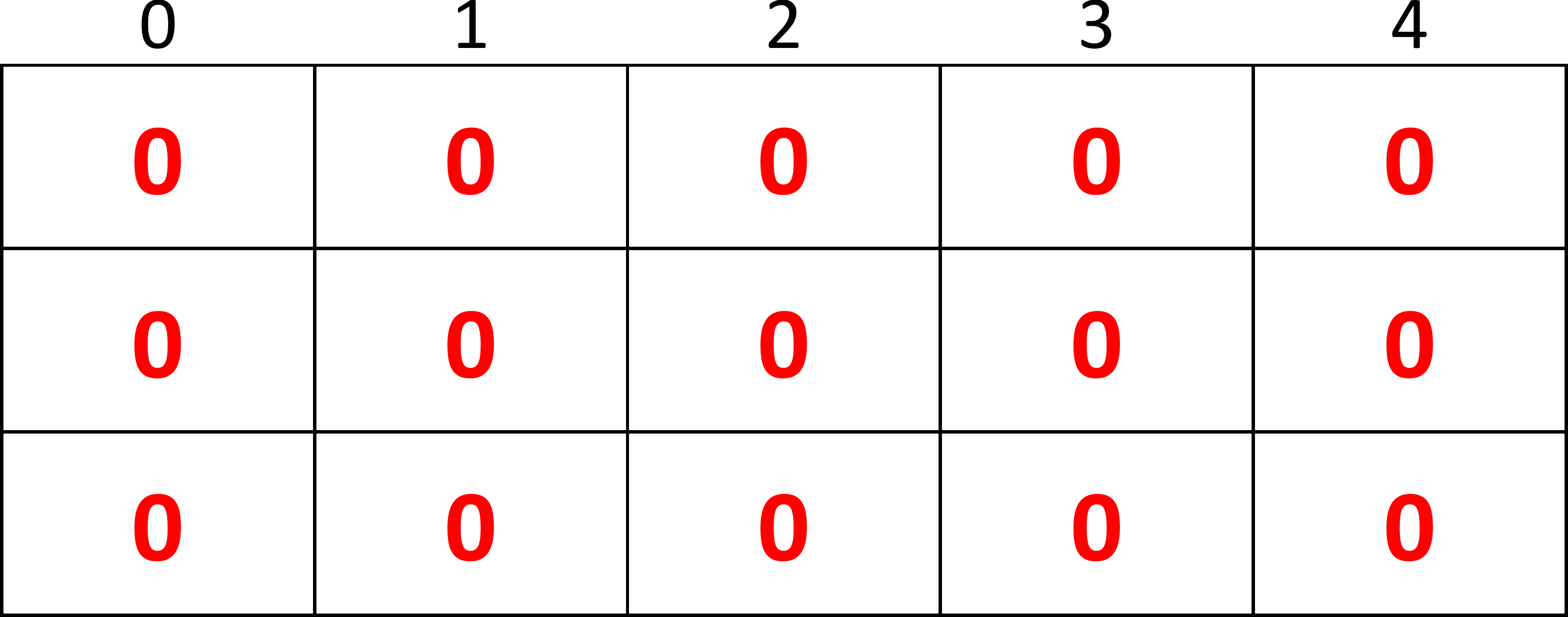
The structure discards the source data keys entirely to save memory space. It maintains a 2D matrix holding numerical counters with independent horizontal rows and vertical columns. Each row is assigned its own independent hash function.
Key Idea
Because distinct keys can map to overlapping cell locations, hash collisions only ever increase or bloat the counters inside individual cells. Therefore, the minimum value across all hashed positions is guaranteed to be the cleanest, least-corrupted estimate. The true frequency will never exceed this returned minimum.
Data Structure Operations
Increment(x)
Passes the input through each row’s hash function to resolve specific column coordinates, incrementing the counter at every targeted matrix cell by 1.
- Time Complexity: where matches the fixed row depth count.
Algorithm 5 Count-Min Sketch Counter Increment
procedure Increment()
for do
HashFunc()
Estimate(x)
Queries the hashed matrix cell coordinates for the key and screens out inflated error noise by isolating the absolute minimum value among them.
- Time Complexity: operational calculations.
- Notes: While the isolated count can occasionally over-estimate due to collision footprints, it will never under-estimate the true frequency.
Algorithm 6 Count-Min Sketch Frequency Estimation
procedure Estimate()
for do
HashFunc()
if then
return
Mathematical Design
To limit estimation error margins, the layout dimensions of the matrix grid are derived from a chosen error tolerance threshold () alongside a targeted confidence level ():
- Matrix Width (Columns ): Dictates the range bounds of the hashing calculations. More columns compress the numerical probability of a collision occurring inside any single row:
- Matrix Depth (Rows ): Dictates the number of independent hash functions. More rows reduce the probability that every row will sustain a significant collision overlap for a specific item:
Common Pitfalls
- Assuming Absolute Counting Precision: Using a sketch structure when exact counts are mandatory. The structure is inherently lossy and tailored to identifying broad trends or heavy-hitters rather than ledger accounting entries.
- Neglecting to Size Matrix Grids to Stream Volumes: If the chosen column width count is too narrow for the total aggregate frequency volume of the stream, cells saturate uniformly, causing estimation errors to exceed the planned limit.
Trade-offs Compared to Other Data Structures
| Evaluation Parameter | Hash Map Structure | Count-Min Sketch Structure |
|---|---|---|
| Accuracy Standard | 100% Precise Exact Results | Probabilistic Estimates (Over-estimates) |
| Memory Footprint Scaling | — Expands with every unique key added | — Bounded flat matrix layout size |
| Explicit Key Preservation | Yes | No |
| Optimal Use Cases | Bounded local datasets | Heavy-hitter stream mining in massive streams |