Manipulating Text
Classification
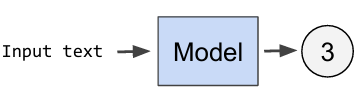
- Sentiment extraction
- Intent detection
- Language detection
- Topic modeling
Classification ― word (noun, verb, …)
Multi-classification ― “My dog had a walk inside the park”
Evaluation Metics
- Accuracy: of observations that were correctly predicted (could be heavily swayed by data collected in data set)
- Precision: of predicted positive that were corrected
- Recall : of actually positive that were corrected
- F1-Score: the harmonic mean of both Precision and Recall to give off number
BLEU - (Bilingual evaluation understudy) ― quality of text translated, similar to “precision”
ROUGE - () ― quality of text generated, similar to “recall”
Perplexity ― quantifies how ‘surprised’ the model is to see some words together
these metrics always needs references
Tokenization
How to cut sentences into the model
Note
the unit of text = token
So less things gemini gives back = less tokens spent
The more token given = more time spent to process = more expensive
Sentence: A cute teddy bear is reading.
Arbitrary: cut by grammatical structure
word: each word is a token (will end up with 2 different entities despite being the same word, eg. run vs. ran)
sub-word: process the roots of the word separately with the extensions ( eg. ‘ing’ suffix)
| Method | Pros | Cons |
|---|---|---|
| Word-Level | Simple Interpretable | Risk of OOV Does not leverage knowledge of root |
| Subword-level | Leverages common prefixes and suffixes Learned from the data | Risk of OOV, though less than word-level\ |
| Character-level | Small change of OOV Robust to casing and misspelling | Makes computation slower Embeddings not interpretable |
Word Representation
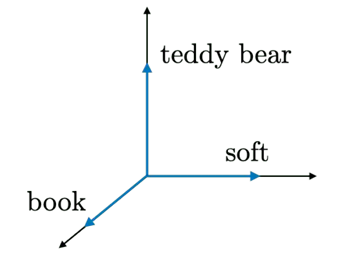
Naive Method: One-hot encoding