A Process is a running instance of a program. This section covers how the Operating System (OS) manages these instances through unique identifiers, isolated memory regions, and specific system calls for process creation and replacement.
1. Anatomy of a Process
When you run a command like ./pwcrack, the OS creates a process. Every process is defined by two main components:
PID (Process ID): A unique integer used by the OS to track and manage the process.
Address Space: The isolated “sandbox” of memory assigned to the process.
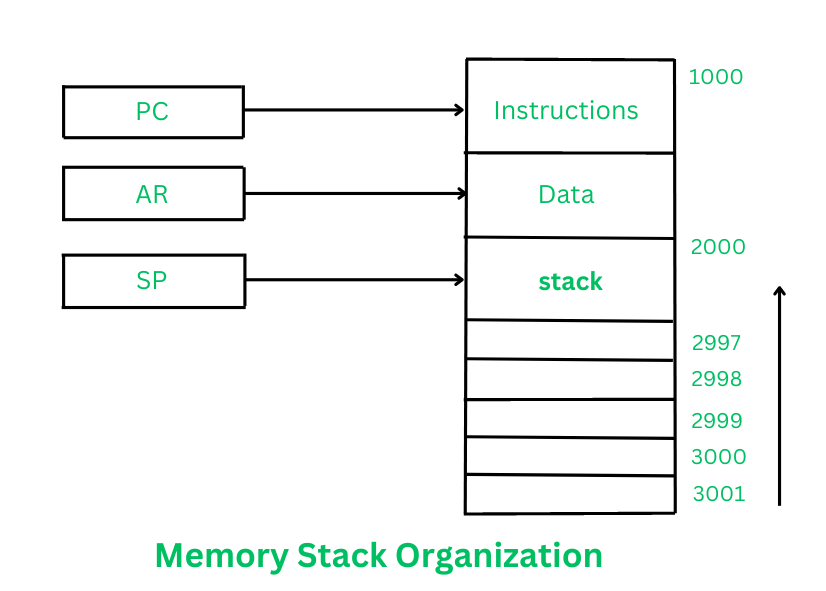
Memory Stack Organization (The Address Space)
Within the address space, memory is partitioned into specific regions managed by the Operating System. These sections are tracked by specific CPU registers to ensure the program executes correctly:
Instructions (Code): This section contains the read-only compiled instructions of the program. It is pointed to by the PC (Program Counter), which tracks the current instruction being executed.
Data (Global Variables): This region stores static data and global variables that persist for the entire life of the program. It is tracked by the AR (Address Register).
Stack: This section is used to store local variables and function call frames.
SP (Stack Pointer): This register points to the current “top” of the stack.
Direction of Growth: As indicated by the upward arrow in the diagram, the stack grows upwards toward lower memory addresses (e.g., from 3001 toward 2000) as data is added.
2. Process Control System Calls
In C, we interact with the OS using three primary system calls to manage the “Lifecycle” of a process.
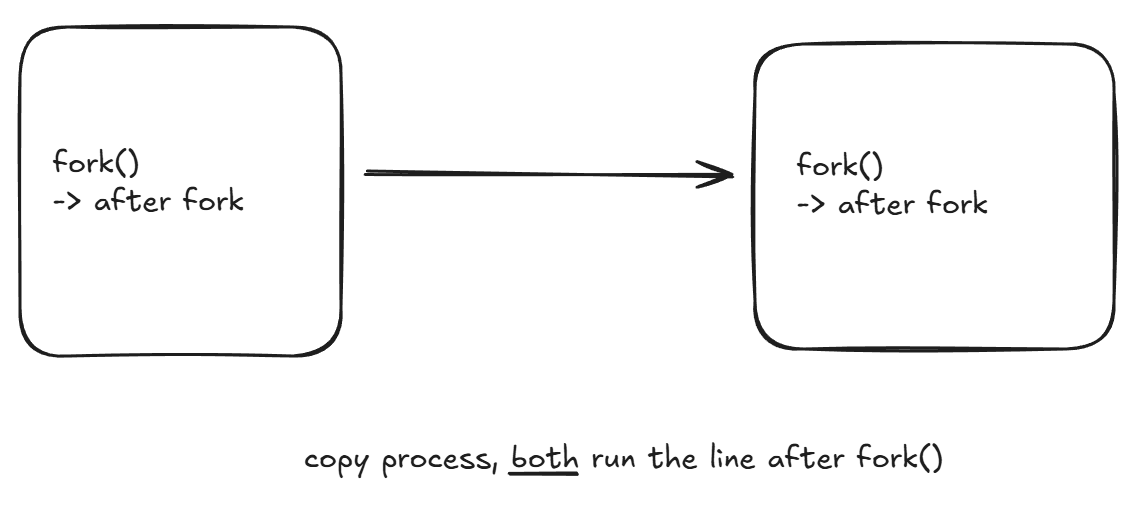
fork(): The Split
Creates an exact copy of the current process. Both processes continue execution from the line immediately following the fork() call.
In Parent: Returns the PID of the new child.
In Child: Returns 0.
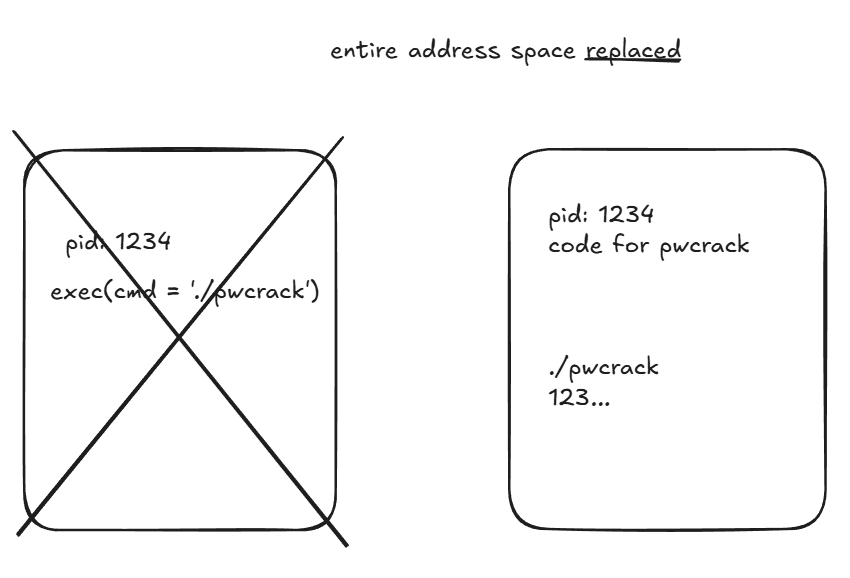
execvp(): The Replacement
Replaces the entire address space (Code, Stack, Global variables) of the current process with a new program.
The PID remains the same.
The original code is gone; the process “becomes” the new program.
waitpid(): The Synchronization
Tells a parent process to “pause” until a specific child process finishes.
pid: The child to wait for.
status: Pointer to an integer where exit information is stored (use NULL to ignore).
3. Implementation: A Basic Shell Loop
This code demonstrates the Fork-Exec-Wait pattern used by real shells (like bash or zsh).
#include <unistd.h>#include <sys/wait.h>#include <stdio.h>int main() { char cmd[1000]; char* args[1000]; while(1) { printf("→ "); // The shell prompt if (fgets(cmd, 1000, stdin) == NULL) break; // ... (Parsing logic to fill args array) ... int pid = fork(); // Create a duplicate process if (pid == 0) { // CHILD: Replace yourself with the command the user typed execvp(args[0], args); // If execvp returns, it means the command failed perror("exec failed"); return 1; } else { // PARENT: Wait for the child to finish before showing the prompt again printf("Starting process %d\n", pid); waitpid(pid, NULL, 0); } }}
4. Process Relationships Summary
System Call
Effect on Memory
Effect on PID
fork()
Duplicates entire address space
New PID for child
execvp()
Overwrites address space with new code
Keeps existing PID
waitpid()
None (Pauses execution)
None
$ ./pwcrack 123abc...
Operating Starts “Process”: A running program
Vocabulary:
PID (process id): unique id the operating system uses to track processes
Address Space: The memory given to process by the operating system
Section (of address space)
Operating system
Global Variables
Code
Stack
System Calls
int fork(): Makes a copy of the current process
new process starts running immediately
starts running from the same line in the code (the line right after fork())
The “parent” process also keeps running!
IMPORTANT
Returns 0 in the child process
Returns pid of the child process in parent
int pid = fork();if(pid == 0) { // child pcrocess} else { // parent process continues}
void execvp(char* program, char** args): Replaces the current process with a newly-started process based on the given cmd and args
Similar to started from command line
Keeps pid, stdin, stdout
All the code, variables, and data are overridden
void waitpid(int pid, int* status, int options): Wait for the subprogram to finish before resuming the parent process
pid: the process id that want to wait until finish
status:
NULL for not caring how it terminated
options:
0: default option
#include <string.h>#include <stdio.h>#include <unistd.h>#include <sys/wait.h>#define CMD_LENGTH 1000// Puts arguments into result using strtokint parse_args(char* cmd, char** result) {/* run strtok*/}int main(){ char cmd[CMD_LENGTH]; char* args[CMD_LENGTH]; while(1){ printf("→ "); char* result = fgets(cmd, CMD_LENGTH, stdin); if(result == NULL){ break; } cmd[strcspn(cmd, "\n")] = 0; int argc = parse_args(cmd, args); args[argc] = NULL; int pid = fork(); if(pid < 0){ printf("fork() failed: %d\n", pid); break; } else if(pid == 0){ // child process execvp(args[0], args); } else { // parent process (the shell) printf("Starting %d\n", pid); waitpid(pid, NULL, 0); } }}